The Setting in Your Manuscript

When I was in fifth grade I read a book with a vivid salt-sprayed setting on the coast of Maine, a mysterious place a few hours drive from where we lived in inland Massachusetts.

The author’s words described it in great detail and I entered her world vicariously.

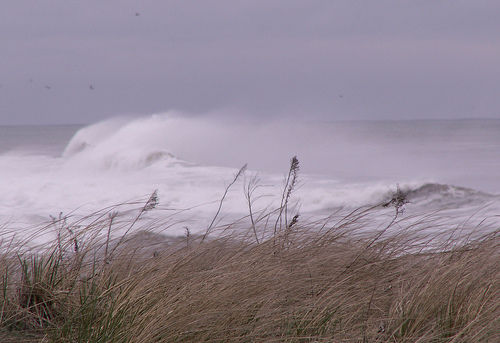
The marsh grass swept the tips of my fingers as I crossed from the field to the edge of the beach. I could smell the dampness of the spray. The grains of sand were warm on the bottom of my feet as I walked the shore, and I shivered when the icy water reached my toes.

In this story, the child protagonist lived in an idyllic summer setting near the sea. The house had weather-beaten shingles, the windows were always open and the sheer white curtains fluttered in the ocean breezes.

When the child looked down from her bedroom window, she saw her mother weeding a flower bed of zinnias and petunias.

You’re wondering how I would remember such a simple scene in a book so long ago.

Here’s the thing. I had never seen the ocean. I wanted to see that ocean. I wanted to walk on that beach, and I definitely wanted to grow a flower garden.

For most readers, “zinnias and petunias” would be enough. I, however, had no idea what those flowers looked like.

I sorely wanted to see these flowers in my mind’s eye, so I asked my mother.

“Mummy, what are ‘zinnias’? What are ‘petunias’?”

My mother said, “I don’t know.”

My mother always said “I don’t know.” It was always too much trouble for her to devote a minute to explaining something to me.

You might find this sad or disconcerting. Don’t.

Yes, the coldness, that was inherent in that negativity, did hurt me. It caused me to turn within myself. Why wasn’t I worth an answer? Why couldn’t I get a response to that which puzzled or bothered me? Why was I always left hanging in uncertainty?

On the up side of this was the fact that her attitude fostered creativity and resourcefulness in me. I had to find my own answers. I had to find my own way to do things. I had to keep plugging away.

Look what just happened. You just witnessed a flashback.

A description of Setting sidetracked into a scene from my memoir—the reason being that I’m deep in the editing process right now and I never know what is going to trigger a momentary shift in time.

I began this post with the intention of describing the importance of detailed settings, and lapsed into recalling a frustrating childhood moment.

Books should totally do that too.

The book set in Maine did a perfect job with the setting for most people, so I doubt that anyone—except me—would object to not having enough description to visualize zinnias and petunias. However, my puzzlement over the zinnias and petunias is the kind of opportunity for description that we writers need to identify in our pages.

The zinnias had layers of tiny petals, that began at the center of each bloom and expanded outward like the explosion of a fireworks display.

The petunias, trumpet shaped, and ruffled like the collar of my favorite blouse, were white with throats of purple and lavender.

Look for your petunias and zinnias. Paint them vividly with words and feelings.

publishing newsFollow me on Facebook.

setting

The Playlist of My Memoir

My memoir has a musical current running through it that begins with the energetic rhythms of the Charleston and ends with a sentimental Van Morrison tune.

Blog posts on this page frequently have their beginnings in my musical memories, and many of them are gathered during my aerobic dance class.

I’m used to writing with a playlist at home. Often I’m optimistic for the future, sometimes moody for the present—and contemplative of the past. I get up periodically to move across the floor, yoga dance style, so it’s only natural that I should find myself developing writing themes during grapevines and curls.

memoir

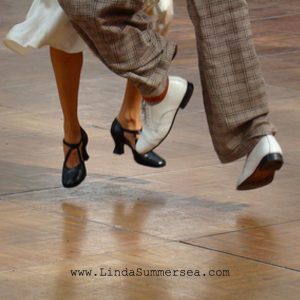
Today was one of those days. Our newest routine involved a combination of  The Charleston and The Jitterbug—the dance steps of my grandmother Mémère and my mother.

I had never actually tried either of these moves but as soon as my feet fell into the snazzy jazzy steps of the Charleston with my arms swinging back and forth, I was drawn back in time to a few days before Memorial Day in 1929. It was Thursday, May 23, five months before the Stock Market crash. Could life have been any more optimistic? The two who would become my grandparents were whooping it up in the rumble seat of their best friends’ Buick after a night out on the town.

Mémère personified the quintessential Roaring Twenties gal with her auburn boop-boop-bee-doo curls cut in a stylish bob. Her fashion was glitzy and glamorous, her Prohibition beverage of choice was brandy and she loved to dance and sing at every opportunity.

Mémère was also six months pregnant with my mother that night.

Her water broke with the impact of a pothole off Main. Her shrieks cut the cool night air as the warm amniotic fluid seeped onto the seat and soaked the hem of her dress.

“Gerrrrald! The baby! The baby’s coming!!”
My grandmother always tended to shriek when she was excited.

That night, the amniotic fluid and the brandy combined in a potent mix.

Mémère and Pépère hastened back to the triple-decker in the Buick. Pépère helped her down onto the running board and then carefully up the three flights of stairs to their walk-up apartment. He could hear my grandmother moaning on the bed as he shut the door and flew down the stairs to fetch the doctor two streets away.

Pépère and the doctor arrived barely in time to deliver my mother. The young doctor shook his head nervously. Mummy weighed a mere two pounds.

There weren’t a lot of options back then for a premature home birth. He washed and dried his instruments at the kitchen sink, placed them in the black leather bag and snapped it shut. As he unrolled his shirt sleeves and buttoned his cuffs, the doctor gave careful thought to the situation.

He returned to the bedroom, where Mummy lay at Mémère’s breast and Pépère sat nervously on a straight back chair. He asked Pépère to find a shoebox.

Dr. Favreau proceeded to swaddle Mummy with a diaper folded over multiple times, and then he nestled her in the shoebox like a robin chick found beneath an apple tree in April. His instructions were simple. “Keep her in the oven with the door open.”

It was a gas oven.

The doctor tapped his bowler onto his head while Pépère accompanied him to the door. “Best of luck to you,” said the doctor as they shook hands. He retraced his steps down the stairs to the street level, slower this time. The milkman looked up from the bottles he was setting in the delivery box on the porch.

Mummy thrived in the warmth of the gas oven on Moon Street. She’s never been sick a day in her life, with the exception of that gallstone operation back in ’74. She’ll be 87 when the lilacs bloom.

The story that blossomed on the notes of the Charleston had been in development for a while, but it took experiencing the dance itself, eighty-seven years after the event, to bring it to life.

I continued to stretch and move and dance, finally coming back to reality with Stevie Nicks’ Stop Draggin’ My Heart Around.

And Tom Petty…”I’m learning to fly, but I ain’t got wings
Coming down is the hardest thing

Well, the good ol’ days may not return
And the rocks might melt and the sea may burn.”

By the time we were positioned on our mats in plank, Van Morrison was echoing off the rafters.

Hamstring stretch, seated twist.

I pulled back to child’s pose for a few minutes, then rolled onto my side with my eyes shut.

I made believe the drops sliding down my cheek were sweat.


memoirFollow me on Facebook.

Sign up at left to receive these Blog posts via email.


Publishing News, continued.

Publishing News is continuing to be somewhat grim.

After the Booktrope fiasco, it appears that a lot of us have been talking about being more proactive about our futures, and checking around for similar writing on the wall.

A. C. Fuller posted a link to the publishing nightmare that writer Claire Cook (author of Must Love Dogs, which became the film starring Diane Lane and John Cusack) experienced and lived to tell about.

Writers, you have to read this!

In spite of the chain reaction of disasters, one aspect that Claire Cook notes in her story is identical to what I mentioned last night.

I said: “But not to worry… if you’re a writer, you know that you can’t stop writing just because of turmoil in the market. Likewise, the readers aren’t going anywhere either.”

She said: “I never once questioned that I would continue writing. And I never once questioned that my readers would want to read my next book, no matter how it was published.”

Isn’t this so true? Writing is such a calling that we can’t just quit—even when it gets bad.

No one says it better than Claire Cook herself, so here you go. Her story appears on the website of Jane Friedman, linked below.

https://janefriedman.com/i-left-my-agent/

Onward and Upward!

publishing news

Follow me on Facebook.

Subscribe to my Blog at left. Receive it via email.


After Booktrope

After the collapse of  Booktrope last week, what do we know about the future of alternative publishing methods?

If you’re a writer who has been exploring how and where to submit your manuscript, you know that the publishing business has been changing at warp speed in recent years.

Traditional publishing? Self-publishing? Book packagers? Team publishers? Specialty publishers?

Booktrope in Seattle WA described itself as “Team Publishing”.

As a new resident of the Seattle area, I met a number of satisfied Booktrope authors last year at the Pacific Northwest Writers Conference, and I fully intended to get more information about the Booktrope process at this year’s PNWA conference.

The announcement from Booktrope at 3 PM Pacific time last Friday came as a great shock to  the writer community, the authors and their 11 creative team employees.

From Publishers Weekly:

“Booktrope, a book publishing startup software platform that gave authors easy access to teams of editors, designers, marketers and other support staff, will close down at the end of May. According to a report on Geekwire, Booktrope is shutting operations despite raising more than a $1 million in investment in 2015.”

Booktrope authors are now scrambling to recover and place their books elsewhere.  Very discouraging and definitely not easy.

In my mind, and I’m sure most everyone else’s, this raises the question:

What is the writer’s future in any kind of publishing? Where do we go?

Everyone knows that traditional publishing has tightened its belt. Good luck getting in without some serious luck or connections. There are a lot of great writers out there. Forget about old-fashioned “over the transom” submissions.

On the opposite end, we have massive opportunities in self-publishing and it’s easier than ever. Self-publishing no longer has the negative connotation of the “vanity” presses—although there are still vanity presses to beware of.

But… that means that there’s now a glut of books in the marketplace. Especially on Amazon. Competition is fierce. Quality isn’t always the best.

In between those two methods, we had Booktrope and we still have other alternative book packagers whose creative teams assist writers so that— hopefully—they don’t take their book to market too soon and look like idiots.

On my end, now that I’m seeing the light at the end of the editing tunnel on my own manuscript, I’ll be doing some research and also pursuing the traditional pitch sessions this summer. Getting an agent is certainly as difficult as getting a publisher.

But not to worry… if you’re a writer, you know that you can’t stop writing just because of turmoil in the market. Likewise, the readers aren’t going anywhere either.

………………………….

If you’d like to hear more about the Booktrope situation and how it all went down, I recommend that writers listen to A. C. Fuller’s podcast Writer 2.0 for his interview with Tess Thompson, an early Booktrope author who was with them from the beginning. A. C. Fuller’s The Anonymous Source was also a Booktrope title.

Even if you know nothing of this situation, it’ll give you a perspective on a worst case scenario.

Thanks to A. C. Fuller and Tess Thompson for a “fair and balanced” presentation of the situation, and best of luck to all who are now seeking a place for their books, as well as team positions with other publishers.

booktrope


Follow me on Facebook.

booktrope

National Teacher Day

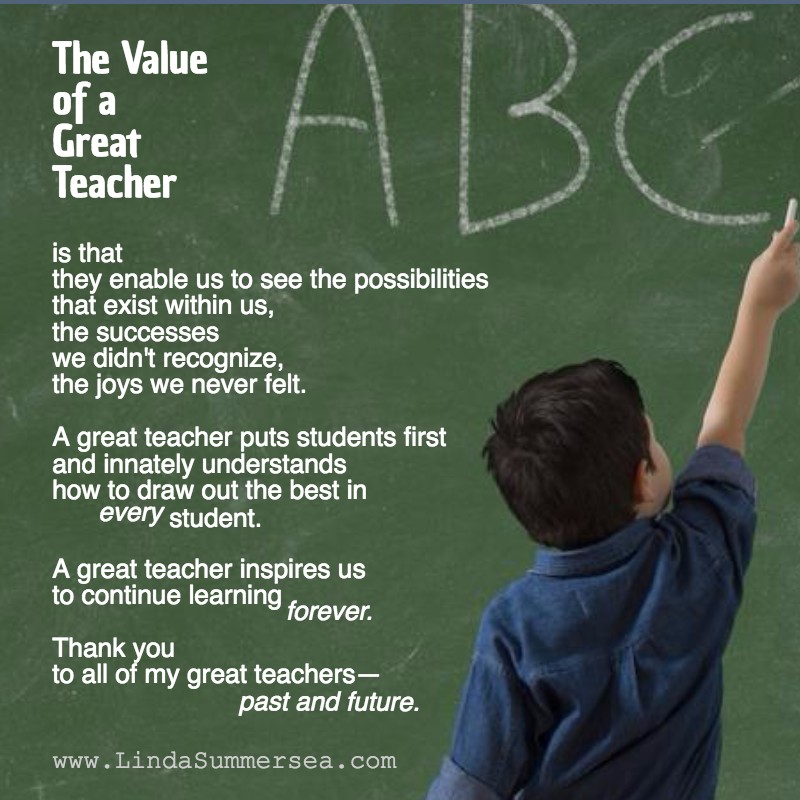
May 3 is National Teacher Day.

In Kindergarten, we were asked what we wanted to be when we grew up. Girls were given the choice of mother, nun, nurse, or teacher—not necessarily in that order. We had to say our choice aloud. I knew that mother—from what I had witnessed thus far—was not a very good occupation. I knew too little of nuns, and I was definitely not nurse material. I didn’t have much empathy. That left “teacher”, which I spouted mechanically when it was my turn.

I was a lost soul, wandering whichever way I was pointed and I was pointed to teaching.

Teaching Art became my life’s career—especially with Youth at Risk and children in low income areas. Even though it was a role that came to me accidentally, I loved it, and I learned a lot from my students. I hope they learned half as much from me.

If you’re fortunate, teaching is not something you learned, but something you were born with.

One of my principals made that observation after her annual teacher assessment visit in my classroom. She told me that I was a “born” teacher— a comment that took me by surprise. It affected me tremendously and after that event, I made even more effort to be sure that every day, every hour, in the classroom was a worthy one.

Every year when I see the National Teacher Day advertising, I can’t help but think of my favorite teachers and how they earned my respect and admiration.

My first Great Teacher was Sister Florentine, my 8th grade teacher. She was the first person in my life to give me a hug. I can still feel the rough brown wool of her habit wrapped around my shoulders and the pressure of her wooden cross on my chest as she drew me close.

My second Great Teacher was Adele Davis, my 9th grade English teacher. She read my essays aloud to the class. If we had a two page assignment, I usually wrote four. I loved to write and I didn’t know when to stop. Our class was the period before lunch, so as she read my work, all eyes were on the minute hand of the clock as it inched forward to noon. I knew better than to think anyone might be listening. I didn’t have anyone to sit with at lunch so it wasn’t a big deal for me.

I sat at the back of the class, next to student X, a guy who made derogatory remarks about my body. Listening to Mrs. Davis distracted me from my self-consciousness and the daily pain of having to sit next to him.

Writing comedy was what I enjoyed most. I listened intently, noticing which lines she liked, which sentences made her shake with laughter. Her reading glasses quivered, making their way down to the tip of her nose where she pushed them back up again.

Those minutes before the lunch buzzer sounded were some of the best times of my life. She placed value on what I had to share.

Both of those teachers died quite a long time ago. As an adult, I tried to find them multiple times, but it was before the Internet, not an easy task. Now, of course, I’ve seen their obituaries. They both lived long lives.

Maybe, if you had a great teacher in your life, on May 3, you might reach out to them with a few words of thanks from the past.

BestTeachers